
Electrical Safety Tips for Kerala Homes in 2026
- 8 hours ago
- 9 min read
A safe home electrical system is easy to ignore until the fan smells burnt, the inverter trips during a storm, or a socket sparks near a wet kitchen counter. In Kerala, electrical safety needs extra attention because homes face a mix of heavy monsoon rain, high humidity, lightning, coastal air, frequent appliance use, and growing rooftop solar and inverter setups.
The good news is that most electrical risks can be reduced with regular checks, the right protection devices, and a few everyday habits. These Electrical Safety Tips for Kerala Homes in 2026 focus on practical steps that fit apartments, independent houses, villas, and older family homes across the state.
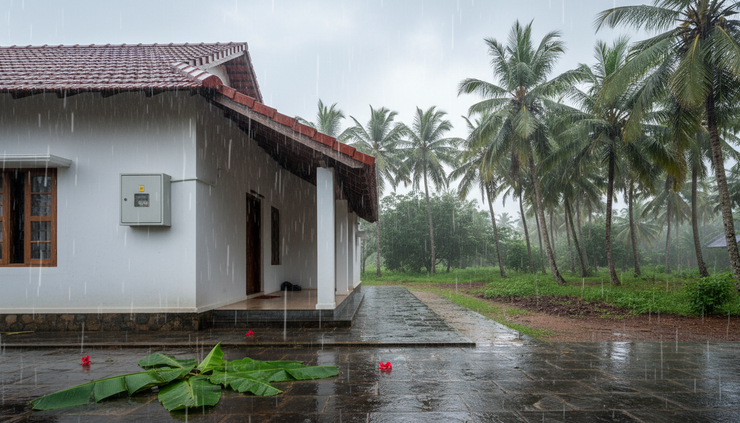
Electrical Safety Tips for Kerala Homes - Start with a proper electrical inspection
Many electrical problems begin quietly. A loose connection heats up behind a switchboard. An old wire loses insulation. A distribution board gets overloaded after new appliances are added. These issues may not trip a breaker right away, but they can create shock and fire risks.
A licensed electrician should inspect the home at least once a year, and sooner if the home is old, renovated, rented out, or recently flooded. The inspection should cover:
Condition of wiring insulation
Load capacity of circuits
Loose switchboard connections
Proper grounding, also called earthing in India
Quality of the main distribution board
Signs of overheating, such as discoloration or a burnt smell
Correct rating of breakers and fuses
Outdoor wiring and exposed junction boxes
Older Kerala homes often have electrical systems built for a time when one mixer, a few tube lights, fans, and a television were the main load. Today, a single home may run air conditioners, washing machines, water heaters, induction cooktops, inverters, CCTV, dishwashers, and chargers for many devices. The wiring should match that reality.
If a breaker trips again and again, do not keep resetting it. A tripping breaker is not an inconvenience to defeat. It is a warning.
Use RCCBs, MCBs, and surge protection correctly
A modern distribution board should do more than turn power on and off. It should protect people, appliances, and wiring.
Three protection devices matter most in Kerala homes.
MCB
A miniature circuit breaker protects wiring from overloads and short circuits. It trips when too much current flows through a circuit.
RCCB or ELCB
A residual current circuit breaker, often called an ELCB in common use, helps protect people from electric shock by detecting leakage current. This is especially useful in wet areas such as bathrooms, kitchens, laundry spaces, and outdoor zones.
Surge protection device
A surge protection device helps protect appliances from sudden voltage spikes, including spikes caused by lightning or grid switching.
Kerala’s storm season makes surge protection especially useful for homes with refrigerators, smart TVs, computers, CCTV systems, routers, inverters, and solar equipment. Plug-in surge strips can help for individual devices, but a properly installed surge protection device at the distribution board gives broader protection.
Do not mix old ceramic fuses, undersized wires, and new high-load appliances without checking the full system. Protection works only when the breaker, wire size, grounding, and load are matched.
Take monsoon safety seriously
Water and electricity are a dangerous combination. During Kerala’s monsoon, homes need a different level of care, especially in low-lying areas, older houses, and places that have seen waterlogging before.
Before the rainy season begins, check these areas:
Outdoor sockets
Pump motor connections
Gate motor wiring
Terrace lighting
Garden lights
Borewell and well pump controls
Balcony wiring
Exposed junction boxes
Temporary extension wires
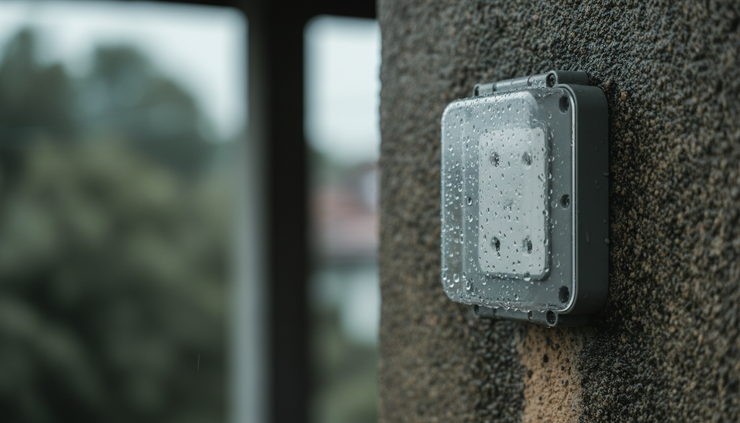
Outdoor sockets should have weatherproof covers. Wiring should run through proper conduits, not loosely along walls or under tiles. Junction boxes should be sealed and placed where rainwater cannot collect.
If water enters the home, turn off the main power supply only if it is safe to access the switch without touching water. If the main switch area is wet, stay away and call the electricity board or a licensed electrician. Never step into standing water inside a home if electrical outlets, extension cords, or appliances are submerged.
After flooding or seepage, do not switch power back on just because the water level has dropped. Moisture may remain inside walls, conduits, switchboards, sockets, and appliances. A professional should check insulation resistance and grounding before the system is used again.
Protect bathrooms, kitchens, and laundry spaces
Wet areas need stricter rules than bedrooms or living rooms. In bathrooms, water heaters, exhaust fans, switches, and sockets should all be placed with care. Do not install ordinary switches or sockets close to showers, taps, or wash basins.
For bathrooms:
Use water heaters with proper grounding
Install an RCCB for shock protection
Keep switches outside the bathroom where practical
Avoid extension cords completely
Check geyser wiring and plug condition often
Replace cracked switch plates and loose sockets immediately
Kitchens also carry higher risk because they combine water, heat, metal appliances, and heavy loads. Mixers, grinders, microwaves, induction cooktops, refrigerators, dishwashers, and water purifiers should not all depend on one overloaded socket strip.
A refrigerator should have a dedicated socket. High-load appliances such as ovens, induction cooktops, dishwashers, and water heaters should use circuits rated for their load. Avoid multi-plug adapters for appliances that heat, cool, pump, or compress.
Laundry spaces need similar care. Washing machines should use grounded outlets and should not share weak extension cords with irons or water pumps.
Avoid overloaded sockets and extension cord habits
One of the most common home electrical mistakes is using one socket for too many things. A multi-plug adapter may look harmless, but it can overheat when used with high-load appliances.
Avoid plugging these into ordinary extension boards:
Irons
Electric kettles
Microwave ovens
Induction cooktops
Room heaters
Water heaters
Washing machines
Air conditioners
Refrigerators
Extension cords are meant for temporary use. They should not become permanent wiring for a room. If a room does not have enough sockets, add proper wall outlets through a licensed electrician.
Watch for these warning signs:
Warm plug tops
Buzzing sounds
Flickering lights
Burning smell
Black marks near socket holes
Loose plugs that slip out
Sparks when switching on a device
If any of these appear, stop using that socket until it is checked. Replacing a damaged socket is far cheaper than repairing fire damage.
Give air conditioners and high-load appliances dedicated circuits
Air conditioners are now common in many Kerala homes, especially in bedrooms and home workspaces. They draw much more power than lights or fans. A split AC should not share a weak circuit with other heavy appliances.
Each high-load appliance should have the right wiring, breaker, socket, and isolator. This applies to:
Air conditioners
Water heaters
Induction cooktops
Ovens
Washing machines
Dishwashers
Well pumps
Sump pumps
EV chargers
When buying a new appliance, do not judge safety only by the plug shape. Check the rated power and ask whether the existing circuit can carry it. A qualified electrician can confirm the wire size, breaker rating, and grounding.
If the lights dim each time a motor starts, or if an AC trips the breaker during startup, the circuit may need attention.
Keep inverter and battery systems safe
Inverters are common in Kerala because they keep lights, fans, routers, and basic appliances running during outages. But an inverter is still an electrical system with batteries, cables, ventilation needs, and fire risk if installed poorly.
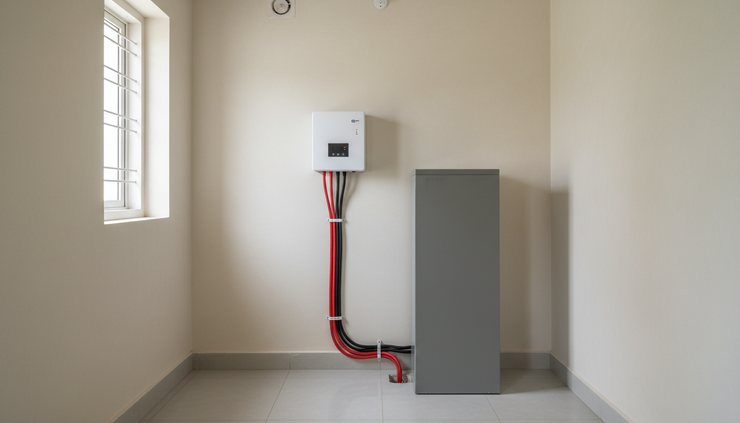
Place inverter batteries in a dry, ventilated area away from children, cooking flames, and direct rain exposure. Do not keep them in tightly closed cabinets without airflow. Battery terminals should be clean and covered. Cables should be thick enough for the load and fixed properly.
Avoid connecting high-load appliances to a small home inverter unless the system is designed for it. Many inverter systems are intended for lights, fans, and low-power devices, not irons, heaters, kettles, or pumps.
If the inverter makes unusual sounds, gives a burning smell, heats up, or shows repeated faults, switch off the connected load and call a technician.
Treat rooftop solar as a serious electrical system
Rooftop solar adoption is growing, and many Kerala homes are adding solar panels with grid connection, battery backup, or hybrid inverters. Solar can reduce electricity bills and improve backup power, but it also adds DC wiring, isolators, inverters, earthing, and rooftop exposure.
A rooftop solar system should be installed by trained professionals. The structure must suit the roof, wiring should be protected from heat and rain, and the system should have proper DC and AC isolation. Earthing and lightning protection need careful attention.
Keep the solar inverter area dry and accessible. Do not store household items against it. Make sure labels are clear so technicians and emergency workers can identify solar supply points.
After strong winds or heavy storms, visually check the panels from a safe location. Do not climb onto a wet roof or touch solar wiring. Call the installer if panels look loose, cables hang down, or the inverter shows an error.
Prepare for lightning and voltage fluctuations
Kerala homes can face lightning strikes and voltage changes during storms. Even if lightning does not directly hit a house, nearby strikes can send damaging surges through electrical lines, cable lines, and network wiring.
Basic protection includes:
Proper grounding for the home
Surge protection at the distribution board
Quality surge protectors for sensitive electronics
Safe routing of antenna, cable, and network wires
Unplugging sensitive devices during severe storms when practical
Do not use wired landlines, wired internet equipment, or appliances connected near wet areas during lightning storms. Charging phones during normal rain is usually not a problem if the wiring is sound, but avoid using devices while connected to questionable sockets or damaged chargers.
Use only good-quality chargers and cables. Cheap counterfeit chargers can overheat, fail insulation tests, or damage devices. If a charger becomes hot, smells burnt, or makes a buzzing sound, replace it.
Childproof the electrical system
Homes with children need extra protection at outlet level. Children are curious, and Kerala homes often have sockets at accessible heights near floors, beds, study tables, and TV units.
Use shuttered sockets where possible. Add safety covers to unused outlets, but choose covers that fit securely. Keep extension cords out of reach and avoid running wires across floors where children can pull or trip on them.
Teach children simple rules early:
Do not touch switches with wet hands
Do not insert objects into sockets
Do not pull plugs out by the cord
Do not play near inverter batteries or electrical panels
Tell an adult if a socket sparks or smells strange
Electrical panels should stay closed. Store keys or access tools away from children.
Pay attention to coastal corrosion and humidity
Homes near the coast face salt air, rust, and faster corrosion. Even inland homes in Kerala deal with high humidity. Over time, metal parts inside switches, sockets, light fittings, and outdoor panels can corrode.
Corrosion can create loose contacts and heat buildup. It can also weaken grounding connections. Look for rust marks, greenish deposits, rough switch action, and flickering lights.
In coastal areas, choose good-quality fittings suitable for humid conditions. Outdoor fixtures should be weather-rated. Distribution boards should close properly and stay dry. If a metal electrical box shows rust, have it checked before it fails.
Store spare wires, plugs, and extension cords in dry areas. Do not leave extension boards near windows, balconies, or damp floors.
Make your home ready for EV charging
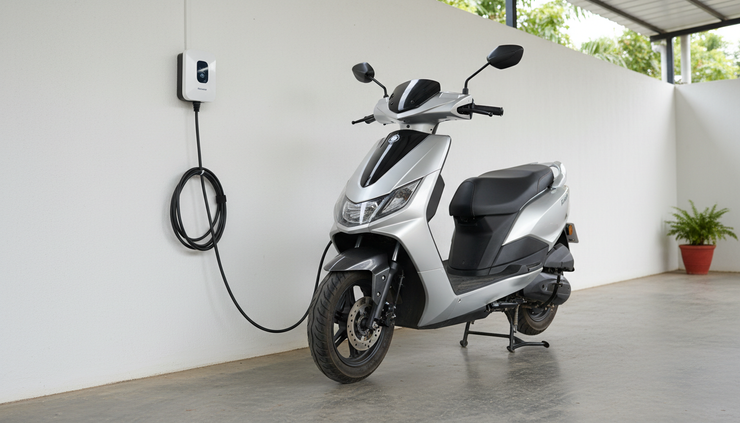
Electric scooters and cars are becoming more common, and many families charge vehicles at home. Charging from a random socket with a long extension cord is unsafe.
A proper EV charging point should have:
A dedicated circuit
Correct wire size
Proper grounding
Suitable breaker protection
Weather protection for outdoor parking areas
Safe cable routing away from water and vehicle movement
For two-wheelers, use the charger recommended by the manufacturer. Do not charge batteries near cooking areas, beds, curtains, or clutter. If a battery gets unusually hot, swells, leaks, smells odd, or makes noise, stop charging and move away from it if safe.
For cars, follow the vehicle maker’s installation guidance and use a qualified electrician. A safe charging setup protects both the home and the vehicle.
Build a simple home safety routine
Electrical safety improves when it becomes a habit, not a one-time repair. A simple routine can prevent many problems.
Monthly checks can be quick:
Test visible sockets for looseness
Look for damaged plugs and cords
Check inverter and battery area for heat or corrosion
Clear dust from appliance vents
Make sure outdoor covers close properly
Remove unused extension cords
Before monsoon, book a deeper check. Focus on grounding, RCCB operation, pump connections, terrace wiring, balcony lights, and outdoor sockets.
After adding a major appliance, review the circuit. A new AC, oven, water heater, pump, or EV charger may need more than an empty socket. It may need a dedicated line.
Keep emergency contacts visible. This can include the local electricity supply contact, a trusted licensed electrician, the solar installer, inverter service provider, and apartment maintenance team if applicable.
What to do during an electrical emergency
If someone receives an electric shock, do not touch them directly while they are still in contact with the electrical source. Switch off the main power if it is safe. If you cannot switch it off, use a dry non-conductive object, such as a wooden stick, to move the source away. Call emergency medical help at once.
If an electrical fire starts, do not throw water on it. Switch off the power if safe and use a suitable fire extinguisher. Keep a dry chemical or CO2 extinguisher in homes with inverters, large panels, or many appliances, and make sure adults know how to use it.
If power lines fall near the home after wind or rain, stay far away. Do not touch the line, nearby metal gates, wet ground close to it, or trees in contact with it. Report it to the utility.
The safest electrical system is not the newest one. It is the one that is matched to the home’s load, protected by the right devices, kept dry, grounded well, and checked before small problems become dangerous. For Kerala homes in 2026, that means preparing for monsoon, planning for modern appliances, and treating every spark, smell, trip, and shock as a signal worth acting on.


Comments